Getting Married
A Nikah and a Western Reception in One Day
How couples in the UAE hold the religious ceremony and the celebration on the same day, and settle the questions that divide families before a venue is booked.
14 July 2026 · 7 min read
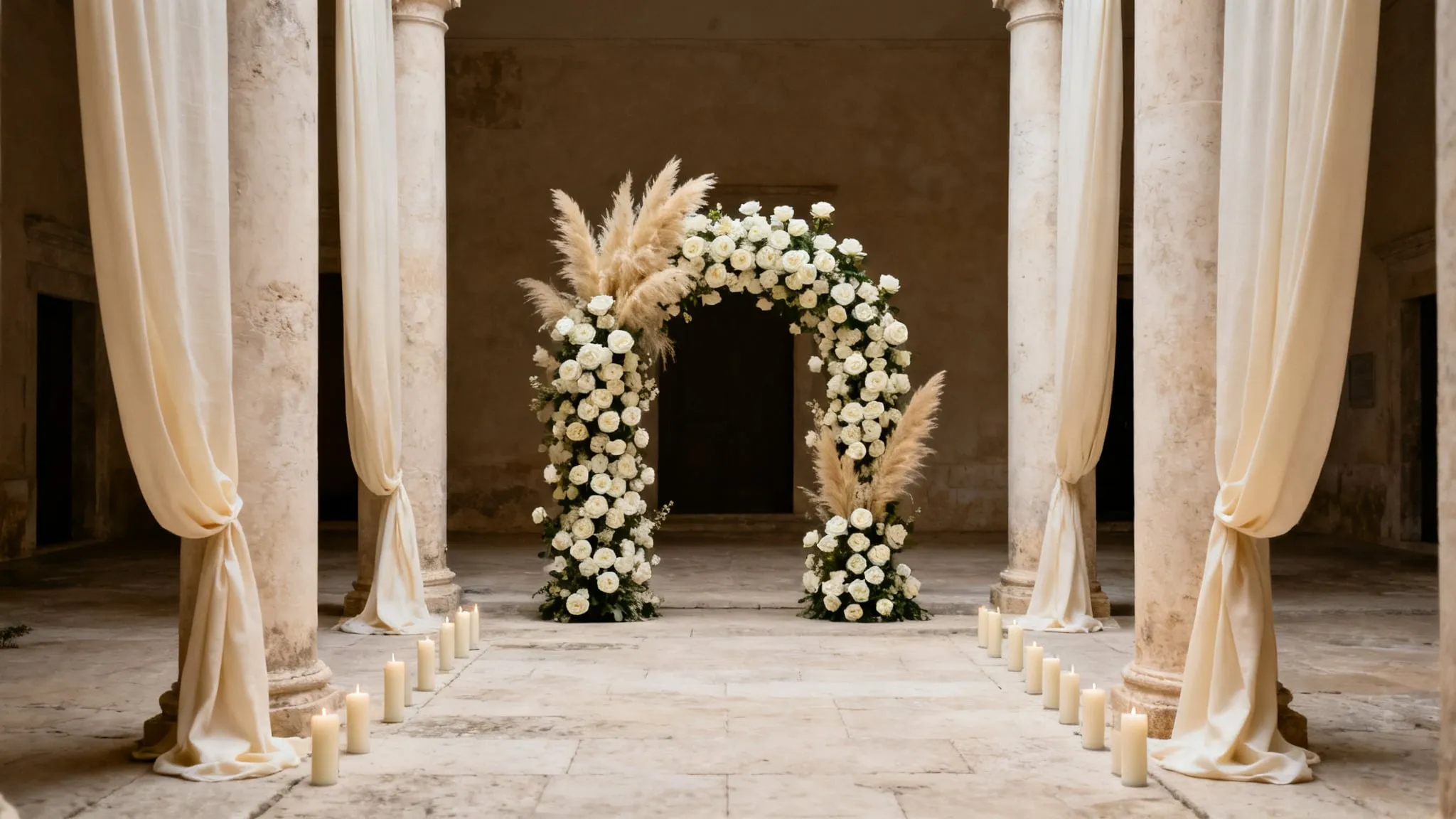
A wedding that joins two cultures in the UAE is usually two events rather than one. The Nikah — also written Nikkah — is the marriage itself: an authorised imam, the witnesses, and registration with the Sharia court, which is what produces the certificate. The reception that follows carries no legal weight at all. It exists to seat people well, feed them, and send them home having felt welcome.
Most of the friction couples describe comes from treating those two things as a single negotiation. Held apart, the questions become answerable. The Nikah is governed by religious requirement and by what the court will register. The reception is governed by hospitality, which is open to discussion in a way that observance is not.
Sort the day into three lists before you look at venues
Before a venue, a date or a guest list, both families need to agree on which parts of the day are required, which are customary, and which are preference.
Required covers what the ceremony cannot proceed without: an authorised imam, the witnesses, and the documents the court asks for. That list is short, and it is not open to a vote.
Customary covers what a family has always done. A recitation before the contract is signed, the groom’s family arriving together, a particular dish at the table, an uncle who speaks. These carry real weight, and they are routinely mistaken for requirements by the people who hold them and for preferences by the people who do not.
Preference covers everything else: colour, flowers, the first dance, the cake, the shape of the tables.
The arguments that surface late are almost always a customary item that one side assumed was required and the other assumed was optional. Naming which list each element belongs to, once, with both sets of parents in the room, prevents more conflict than any amount of later diplomacy.
What the Nikah requires, and where it can be held
The ceremony can take place at a home, in a majlis, at a hotel or at a private venue. The imam travels, and the registration is the same wherever the ceremony happens, so the choice of room is a question of comfort, privacy and capacity rather than of validity. Documents are typically passports and proof of marital status, with further legalised or translated papers depending on the two nationalities involved. The route is set out in full on Islamic marriage.
Eligibility is the item to confirm first rather than last. Who may marry under Sharia in the UAE turns on the faith and the nationality of both partners, and it is the court that confirms it — not a planner, and not a venue. Couples for whom that route is not open, or who would rather not take it, have a civil marriage instead. It changes the calendar more than it changes the day.
The legal route sets the earliest honest date
Where a couple marries civilly, the emirate decides how far ahead the invitation can be printed.
| Route | Time to the appointment |
|---|---|
| Abu Dhabi, regular | About three months |
| Abu Dhabi, express | 1–2 working days |
| Ras Al Khaimah, standard | About three weeks |
| Ras Al Khaimah, express | 7 working days |
Abu Dhabi Express is the only one-to-two-day route of the four; the express options are not interchangeable. As a standard timeline, Ras Al Khaimah is markedly the faster emirate, while Abu Dhabi carries the broader international recognition. The trade is recognition against time, and it is worth making deliberately rather than by default, because the answer determines the earliest date a reception can honestly be built around.
Dress codes that instruct rather than hint
“Modest attire” is not an instruction. It is a hope. Guests who have never attended a Nikah cannot act on it, and guests who have will assume a standard that may not be yours. Say what is meant: shoulders and knees covered, ankle-length preferred, a scarf carried for the ceremony where the venue calls for one.
Black tie and business suit travel badly too. They are read differently in London, Lahore, Manila and Munich, and a line of plain description under the label does more work than the label above it.
If the ceremony and the reception call for different clothes, say so explicitly, and say where guests can change. Anyone flying in is packing days ahead; the invitation is the last chance to reach them.
Music, seating and the shape of the day
Nikah music, where families want it, tends towards nasheed, an oud player or classical instrumental — or no music at all. Receptions run to a band, a DJ, a string quartet or a cultural performance. Ask both families what they expect before anything is booked, because a booking is far harder to unwind than a conversation.
Seating deserves the same question. Some families seat men and women separately for the Nikah and mix at the reception; some keep one arrangement for both; some want the elders together, near the front. There is no safe default to guess at.
The running order itself is rarely the problem. Preparation, ceremony, family photographs, reception entrance, dinner, speeches, a first dance if there is one, and the evening. What gets underestimated is the space between those items — the journey between two rooms or two properties, a change of clothes, prayer times, and the time photographs run beyond whatever the schedule said. Build the transitions first and the day tends to hold.
What the certificate has to do after the day
The certificate registered on the wedding day is a UAE document. If it will be used abroad, it has a further journey: attestation by the Ministry of Foreign Affairs, and then one of two things.
Some countries accept the MOFA-attested certificate directly. Others want their own embassy in the chain and legalise it themselves. Which applies depends entirely on the destination country, and the answer matters most where a residence permit, a name change or a spousal visa is waiting behind the paperwork. The two paths are set out on embassy legalisation.
This is also where the phrase “married in a day” needs qualifying. A ceremony and a certificate can be completed quickly. A document that still has to be recognised in another country runs on its own timeline, and that timeline starts after the wedding, not before it.
Where we sit in this
Bridal Edit Studio is not the operating planner of a wedding. Partners conduct the ceremony and handle the registration; our work is the route, the paperwork and the sequence around them — including keeping the legal half of the day from colliding with the celebratory half. For the reception itself, The Circle is an invitation-only group of venues, photographers, florists and planners who have worked to the same standard before, which is usually what a mixed-culture guest list actually needs.
Couples who want the legal route mapped before anything else is booked can start there, and bring both families into the plan once the fixed points are known.
Questions couples ask
Can the Nikah and the reception be held on the same day?
Yes, and many couples do exactly that: the ceremony earlier in the day, the reception in the evening. The constraint is transition time, not permission.
Does the choice of venue affect whether the marriage is registered?
No. A Nikah conducted by an authorised imam and registered with the Sharia court is an official marriage whether it took place at home, in a majlis or at a hotel. What the venue changes is comfort, capacity and what it will allow on the premises.
What should we tell guests about alcohol?
Whatever the reality is, and in advance. Venues differ, licences differ, and families differ. One line on the invitation or the wedding website is less uncomfortable than a bar that surprises half the room.
One of us is not Muslim. Which route applies?
Eligibility for a Sharia marriage turns on the faith and nationality of both partners and is confirmed by the court, so establish it before booking anything. Where that route is not open, the civil one is, and it carries the timings above.
Start Your Wedding Journey
Whether you're beginning with the legal marriage, planning the day itself, or want the whole of it in one house — tell us where you are.
The legal beginning, the day itself, and the story kept in print.