Editorial
The Rise of Editorial Weddings
Why modern couples are choosing story over tradition — and what changes when a wedding is shaped by direction rather than expectation.
25 April 2026 · 6 min read
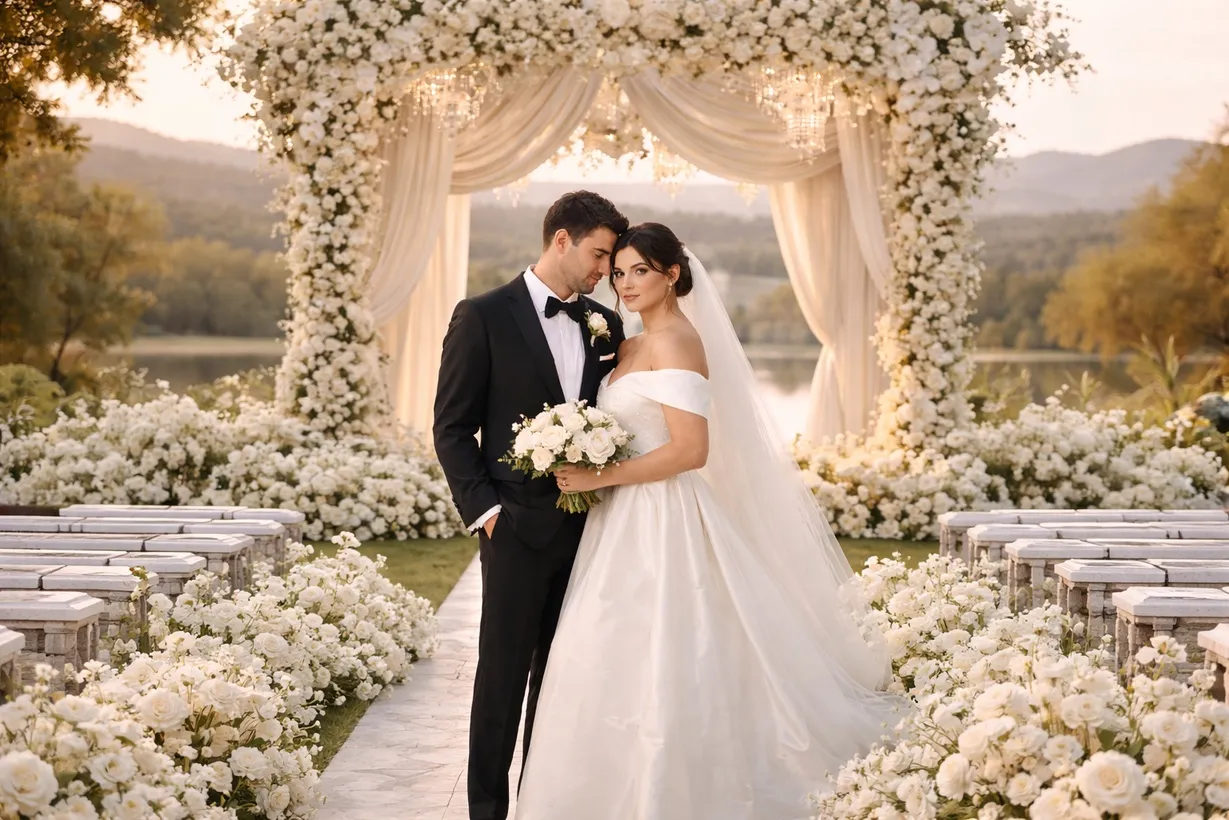
Photo by Bridal Edit Studio
Key Takeaways
- Editorial weddings prioritise story and experience over tradition for tradition's sake
- The right photographer shapes not just images, but the rhythm of the entire day
- Light, space and composition create more impact than over-decoration ever could
The most memorable weddings aren't created by meeting expectations — but by making decisions that truly reflect the couple.
We have all attended weddings that feel more like a series of expectations than a reflection of the couple themselves.
A sequence of events designed to please parents and extended family, with the expectation that the day unfolds in a familiar way: staged portraits, rigid timelines, little room for spontaneity. It is easy to feel pulled in every direction without ever making something that reflects you. The result is a wedding, and a photo album, that feels formulaic and slightly removed from the people who should be at its heart.
Editorial weddings are quietly reshaping that. They let couples tell their stories on their own terms, shaped by their culture, their style and their perspective. What emerges is a celebration that feels personal rather than performative.
What an Editorial Wedding Actually Is
At first glance it is understandable to assume that an editorial wedding refers to the way a celebration is photographed. Its meaning extends well beyond photography. (We take that question apart in full in What Are Editorial Weddings?)
Editorial weddings are shaped through a story-first approach, with every part of the day considered so that it belongs inside the day’s wider narrative. Each moment, from getting ready to the final dance, carries the same tone and visual identity.
Beyond the arc of the day, every moment should also feel developed and refined, yet real. That is the hardest part for couples and photographers alike: balancing direction with authenticity. With careful framing, even the simplest moment can feel effortlessly elevated.
Where Style Becomes Direction
At the heart of editorial weddings is an appreciation for the visual language of print and fashion. Refined colour palettes, considered lighting, thoughtfully chosen backdrops. It is an approach inspired less by the past than by a sensitivity for composition and mood.
Fashion-led bridal styling
An editorial wedding is a reason to be flexible with bridal fashion and to wear more than one look, each contributing to the story of the day. A light, flowing silhouette may suit the ceremony, while something more structured shifts the tone for portraits or the reception. The transition between looks creates contrast without losing cohesion.
Grooms can look beyond convention too — tailoring, texture, references drawn from outside the wedding world entirely. The resulting look should feel aligned with the bride without appearing matched.
Composed light and space
The role of light and space quietly underpins the whole of an editorial wedding. Vivid textures and striking decor play their part, but it is the way light moves through a setting, and how that space is used, that shapes how a day feels and how it reads afterwards.
Natural light is usually something to work in harmony with rather than control. Soft morning light brings calm to the getting-ready hours; golden hour does the rest during portraits.
Couples who get lost in inspiration often end up filling every corner of a space, leaving nothing room to breathe. Editorial weddings treat space with intention. Clean lines and open areas are allowed to stay open, and thoughtful positioning creates balance. That restraint is what lets the eye find the subject.
Why Couples Are Moving Towards Editorial Weddings
The shift reflects a wider change in how wedding planning is approached. Rather than following the linear path laid out before them, couples are taking the freedom to make something genuine and visually lasting.
Fashion, film and photography shape us daily in a way earlier generations would not recognise. That exposure has reshaped expectations of what a wedding can be, and placed greater weight on the experience itself.
Traditions still have their place, editorial or not, but they are not fixed. Couples are more selective — choosing what resonates and leaving what does not. It gives every moment a purpose, and lets the day unfold without anything happening simply because it is expected.
How to Approach the Planning
Harmonising candid moments with considered light and composition is a challenge. A few decisions carry most of the weight.
Choose a photographer with a clear approach
Your photographer’s handling of light, composition and direction will shape the entire day and how it is captured. Choose someone whose work already reflects the story you want told. A photographer of this kind belongs at the start of your plans, not at the end of them: they help guide the rhythm of the day, not only its look.
Relax the timeline
If you and your guests move constantly from one scheduled event to the next, nothing has room to unfold. It affects how the celebration is remembered, and it denies your photographer the in-between moments couples tend to love most.
Loosen the schedule. Skip something. The occasion gains a natural rhythm, and the photographs follow.
Direct gently
Many couples assume editorial weddings mean micromanagement and staged moments. In practice, the balance between direction and spontaneity is what produces the stronger images.
A good editorial photographer steps in when it helps — adjusting position, light, composition — without stifling the energy of the moment. You should never feel you are performing. The more fluid that interaction, the more lasting the final frame.
Final Thoughts
At its core, an editorial wedding is about awareness. Of light. Of space. Of composition.
But more than anything, it is about feeling. It is about a day that reflects who you are rather than what is expected. When you find the balance between natural moments and thoughtful direction, what remains is more than a wedding.
It becomes a story. One that feels just as real years from now as it did in the moment.
Start Your Wedding Journey
Whether you're beginning with the legal marriage, planning the day itself, or want the whole of it in one house — tell us where you are.
The legal beginning, the day itself, and the story kept in print.